The Hype
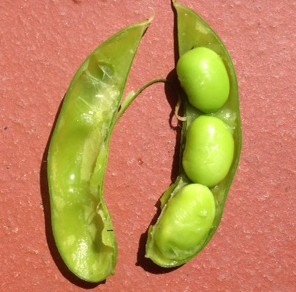
Soybean
Recently, I have been hearing all kinds of, shall we say, ‘interesting’ things about soy. So interesting, in fact, that I felt the need to write about it.
For years, I have been aware of a lot of research supporting the myriad health benefits of soy. The soybean contains phytonutrients called isoflavones (plant estrogens) that have been associated with health benefits from bone health to heart health. It is high in fiber and a complete source of protein – which is unusual for a legume or vegetable. Soy is versatile and easy to cook. From a nutrition standpoint, it seems like a pretty solid candidate for dinner.
To get down to the nitty gritty, I did an internet search for ‘soy bad’. There is a plethora of information reporting health risks from soy on the web. Some of the most serious claims were that soy causes cancer, brain damage, infertility (some people even claiming soy will give boys boobs), and that it is poison in a peapod. I read some information telling me that soy contains ‘anti-nutrients’. These are strong statements about a bean. There appears to be quite the anti-soy campaign going on in the food and nutrition industry.
What is really going on? Is soy bad for us? Is there evidence that soy has negative impacts on our health? Is soy good for us? Is it a nutritious part of a balanced diet? The soybean. A simple bean has become another victim of a major food controversy.
The Science
Let’s start with the nutrient breakdown. The following information pertains to boiled green soybeans, probably the most unprocessed form of soy one can eat (as we do not eat raw soybeans) (1).
½ cup soybeans or edamame contains:
- Protein – 11 grams – complete protein including all essential amino acids necessary to the body.
- Fat – 6 grams – mostly polyunsaturated fat including omega 3 and omega 6 fatty acids.
- Carbohydrate –10 grams
- Fiber – 4 grams
- Micronutrients – calcium, iron, magnesium, phosphorus, potassium, sodium, zinc, vitamin C, and vitamin A. When fermented, soy also contains many B vitamins and vitamin K.
- Isoflavones – also called plant estrogens – primarily genistein and diadzein.
- Other compounds – phytates, trypsin inhibitors, oligosaccharides, and goitrogens.
The soybean is what I would call ‘nutrient dense’, or packed with a variety of nutrients that are good for the body. The controversy appears to be with the isoflavones and ‘others’ noted above, and so begins the breakdown:
Isoflavones: (aka phytoestrogens or plant estrogens) have the capacity to bind to human estrogen receptors and potentially exert estrogen-like activity. They are called SERMS (selective estrogen receptor modulators) because they can have different effects in different tissues. To better understand what this means, consider this: “Soybeans are the only commonly consumed food that provides nutritionally relevant amounts of isoflavones. These are naturally occurring compounds which are classified as phytoestrogens because they bind to and activate estrogen receptors (ER). However, unlike the hormone estrogen, isoflavones preferentially bind to and activate ER-β in comparison to ER-α, and for this reason, are classified as selective estrogen receptor modulators (SERMS). SERMs have estrogenic effects in some tissues but anti-estrogen effects, or no effects, in others. For this reason, conclusions about the health effects of isoflavones cannot be made on the basis of how estrogen behaves in the body (2)“. In other words, we cannot simply assume that they will always act like human estrogen in the body. Sometimes they act like estrogen, sometimes they act against estrogen in the body, and sometimes they have no hormone activity at all.
There is a vast amount of research touting the health benefits of soy isoflavones. There is evidence to support that isoflavones lower ‘bad’ cholesterol, improve blood glucose control with diabetes, improve hormone balance during menopause, and improve bone mineral density (3). In regards to breast cancer, studies indicate that soy isoflavones have a protective effect against breast cancer and that soy food intake is not contraindicated for breast cancer survivors (4, 5).
Soy isoflavones have been blamed for inhibiting thyroid function by blocking thyroid hormone production via components called goitrogens. This has only been seen in people with low iodine levels, and is not statistically significant in people with normal iodine levels (6,7). Low iodine will compromise thyroid function (if you are concerned about your thyroid function, ask your doctor to check your thyroid hormone levels before pursuing any treatments). Moreover, soy is not the only food that contains these goitrogenic compounds. Broccoli, kale, cabbages, and many other foods also contain goitrogens.
As far as the claim that soy isoflavones have feminizing effects in males, there is no research to support this. In fact, studies show that soy food and soy isoflavones do not affect testosterone or estrogen levels in men at all (8, 9). Other reports show that there is no clinical evidence of endocrine or reproductive problems with infants fed soy formula (10, 11). Alas, soy will not turn a boy into a girl, phew!!
A paper from the Vegetarian Nutrition Dietetic Practice Group sums up the safety of soy estrogens like this: “Concerns about potential harmful effects of isoflavones are based almost exclusively on in vitro or animal data. In contrast, human studies support the safety of both isoflavone supplements and soyfoods. For example, neither of these products substantially affects hormone levels in men or women, and neither affects thyroid function even in individuals with compromised thyroid function. Although a recent pilot epidemiologic study linked soy intake to lower sperm concentration, clinical studies show no such effects. Likewise, one long-term study found an association between high isoflavone intake and a slight increased risk of simple endometrial hyperplasia in menopausal women, but numerous other studies that have examined endometrial histology or thickness have not found significant changes. Finally, a recently published observational study linked tofu consumption with adverse effects on cognitive function. However, a more credible study found no association between isoflavones and cognition and the clinical studies are actually suggestive of potential benefits“ (12).
Trypsin inhibitors – inhibit trypsin (right?), which is an enzyme secreted by the pancreas to breakdown proteins into individual amino acids. Boiling the dry beans reduces the trypsin inhibitor content by 90%. As far as I know, nobody eats raw soybeans without soaking or boiling them. Trypsin inhibitors are found in a wide variety of whole grains, nuts, and legumes commonly eaten. Furthermore, it is well established that soy protein is absorbed and utilized in humans. Problem solved.
Phytates – or phytic acid, is defined as a phosphorus-containing compound that binds with minerals and inhibits their absorption (13). It is found in the husks of whole grains and legumes. Phytic acid has been dubbed an ‘anti-nutrient’, and there are some who report that it robs the body of nutrients. This is not true. It does not take minerals out of the body, but it can bind to minerals such as iron or calcium and prevent them from being absorbed into the body. Phytates are also found in nuts, seeds, legumes, and the husks of whole grains.
Oligosaccharides – small sugar compounds from the carbohydrates found in beets, legumes, and squash. Because gut bacteria ferment them, they often cause gas or bloating. Some oligosaccharides called FOS (fructooligosaccharides) are food for colon bacteria. These FOS have been shown to enhance the intestinal flora and improve symptoms of GI distress (13). A little bit of gas is not a significant health concern in my book.
Farming – Soy is one of the biggest farm commodities here in the United States. Depending on which way you look at it, this could be good or bad. According to the North Carolina soybean producers association, most soybeans grown in the United States are processed into crude protein and oil. The crude protein is used in agricultural animal feed. This results in an abundance of soy oil left, which is commonly used in food processing (14). Soy is also commonly genetically modified. It is actually difficult to avoid because it is in so many processed foods. I understand that this information is bothersome to many people. But the genetically modified, highly processed forms of soy are nutritionally very different from an organic cube of tofu or tempeh.
My two cents
Soy has been extensively researched, and is unique with its phytoestrogen content. Aside from these plant estrogens, every other compound in soy that has been criticized is found in many other foods we eat. Other foods considered healthy I might add, such as green vegetables, squashes, and whole grains. Soy has been a food for humans for as long as we know. The Ancient Chinese considered soy to be one of the five sacred grains vital for life (yes – despite the fact that soy is technically a legume). It is becoming more and more popular in our food culture. It is an important source of protein for vegetarians and vegans. For these reasons, I wanted to take a good look at it.
If you do enjoy the soybean, rest assured that minimally processed, organic soy is a nutritious protein rich food. If you don’t like it, don’t eat it. If you are concerned that you have a soy allergy or sensitivity, pay attention to possible symptoms. You would have symptoms such as stomach pain, bloating, or diarrhea. A more severe allergy might cause a skin rash or headache, but these reactions are not common. The bottom line is that soy is safe to eat.
References
- Sourced from the USDA nutrient database: http://ndb.nal.usda.gov
- Vegetarian Nutrition Dietetic Practice Group http://vndpg.org/docs/rd-resources/Isoflavones-RD.pdf
- Natural medicines comprehensive database. http://naturaldatabase.therapeuticresearch.com/nd/Search.aspx?cs=CEPDA~MBR&s=ND&pt=100&id=975&ds=&name=SOY&searchid=45349366
- Soy foods and supplementation: a review of commonly perceived health benefits and risks. D’Adamo CR, Sahin A. Altern Ther Health Med. 2014 Jan; 20 Suppl 1:39-51. http://www.ncbi.nlm.nih.gov/pubmed/24473985
- Soy, Red Clover, and Isoflavones and Breast Cancer: A systematic review. Fritz H, Seely D, Flower G, Skidmore B, Fernandez R, Vadeboncoeur S, Kennedy D, Cooley K, Wong R, Sagar S, Sabri E, Fergusson D. PLoS One. 2013 Nov 28;8(11):e81968. http://www.plosone.org/article/info%3Adoi%2F10.1371%2Fjournal.pone.0081968
- Isoflavone supplements do not affect thyroid function in iodine-replete postmenopausal women. Bruce B, Messina M, Spiller GA. J Med Food. 2003 winter; 6(4):309-16. http://www.ncbi.nlm.nih.gov/pubmed/14977438?dopt=Abstract
- Anti-thyroid isoflavones from soybean: isolation, characterization, and mechanism of action. Divi RL, Chang HC, Doerge DR. Biochem Pharmacol. 1997 Nov 15;54(10):1087-96. http://www.ncbi.nlm.nih.gov/pubmed/9464451?dopt=Abstract
- Soybean isoflavone exposure does not have feminizing effects on men: a critical examination of the clinical evidence. Fertil Steril. 2010 May 1;93(7):2095-104. http://www.ncbi.nlm.nih.gov/pubmed/20378106
- Clinical studies show no effects of soy protein or isoflavones on reproductive hormones in men: results of a meta-analysis. Hamilton-Reeves JM, Vazquez G, Duval SJ, Phipps WR, Kurzer MS, Messina MJ. Fertil Steril. 2010 Aug;94(3):997-1007. http://www.ncbi.nlm.nih.gov/pubmed/19524224
- Soy infant formula: is it that bad? Vandenplas Y, De Greef E, Devreker T, Hauser B. Acta Paediatr. 2011 Feb;100(2):162-6. http://www.ncbi.nlm.nih.gov/pubmed/20860705
- Exposure to soy-based formula in infancy and endocrinological and reproductive outcomes in young adulthood. Strom BL, Schinnar R, Zeigler EE, Barnhart KT, Sammel MD, Macones GA, Stallings VA, Drulis JM, Nelson SE, Hanson SA. JAMA 2001 Aug 15;286(7):807-14. http://www.ncbi.nlm.nih.gov/pubmed/?term=11497534
- http://vndpg.org/docs/rd-resources/Soy-Safety-RD.pdf
- Mahan L.K., Escott-Stump S. Krause’s Food, Nutrition, and Diet Therapy, 10th ed. 2000 W. B. Sounders Company
- North Carolina Soybean Producers Association, Inc. http://www.ncsoy.org/ABOUT-SOYBEANS/Uses-of-Soybeans.aspx


